
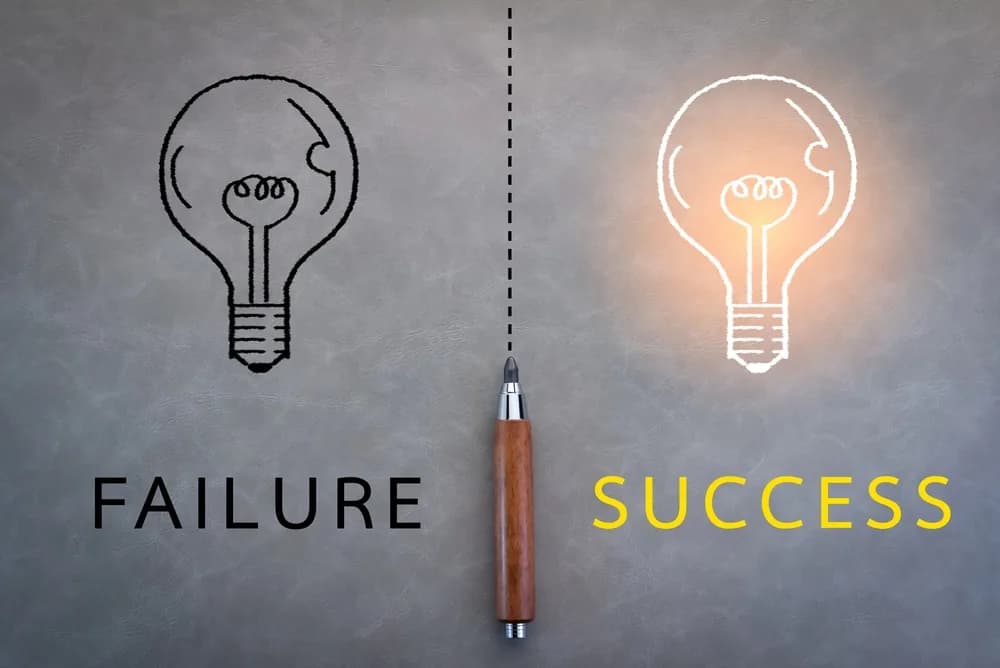
We all want our children to be successful, but what does success truly mean? Is it being happy, famous, wealthy, healthy, or loved? The truth is, success is subjective, and it can mean different things to different people. However, without a clear set of criteria or a reliable yardstick, success becomes an elusive target. Furthermore, any criteria for success are inherently linked to our life's purpose.
To illustrate this, envision a person sprinting in a race. Does their speed matter if they're heading in the wrong direction? Does their direction matter if their ultimate goal is misaligned? The answer to both questions is a resolute NO. Hence, before we equip our children for the race called life, it's imperative that we first calibrate their compass.
The Danger of a Misguided Notion of Success
It is important to teach our children that failure — which is often seen as not being successful — is a crucial part of the learning process. Unfortunately, having an incorrect understanding of success and failure can lead to depression, suicide, breakups, beauty sickness, or gender identity struggles due to societal pressure.
The stories of Lance Armstrong, Elizabeth Holmes, and the Volkswagen emissions scandal underscore the dangerous consequences of a misguided notion of success:
- Lance Armstrong, celebrated for his seven consecutive Tour de France wins, later faced disgrace when it was revealed his achievements were tainted by performance-enhancing drugs
- Elizabeth Holmes, initially lauded as the youngest self-made female billionaire in the US, built her company Theranos on false pretences — ultimately receiving an 11-year prison sentence
- Volkswagen installed cheat devices in 11 million cars to meet emissions standards artificially, costing billions in fines
These examples serve as stark reminders that a warped understanding of success can lead individuals and corporations to engage in illegal and immoral activities, often with severe consequences.
The Western Secular Equation
The Western perspective highly values a lengthy, healthy life filled with pleasures and free from setbacks. When we consider the prevalent Western secular outlook — which solely accounts for life in this world and disregards the afterlife — the equation looks like this:
Lifespan + Pleasures − Losses = 0
In such a framework, success is narrowly defined and gives undue importance to life in this world. Any real or perceived sense of deprivation takes a heavy toll on mental health. A large portion of suicides, depression, and anxiety can be explained by this equation.
The concept of success within a Western worldview might be of value for the 'successful' few, but it cannot uplift society as a whole because worth has been invariably attached to physical attributes like beauty and belongings.
The Islamic Equation
The divine wisdom of Allah (swt) gives us a broader perspective. The Islamic view is based on the understanding that:
- Whatever positive happens to us is a blessing from Allah (swt) for which we are thankful and grateful
- Whatever negative happens, regardless of who is responsible, is a test from Allah (swt) — and the way we deal with that test will determine our true success in the Akhirah
- Any kind of hopelessness or despair is strongly prohibited in Islam
- We are also taught what real failure or loss (khusr) is — it is not connected to physical losses but to our actions and decisions if they go against the teachings of Islam
The focus is on the inputs, not the outcomes, which we understand to be in Allah's hands. Be it our beauty, health, or provisions (rizq, wealth) — we know this is the domain of Allah (swt).
Lifespan + Blessings + Tests = Akhirah (Jannah or Jahannum)
So what separates us from either eternal bliss or eternal torment? Our choices — not anything else we might be very proud of, like lineage, beauty, or belongings. With this clarity, success is defined by those choices that will determine our eternal fate.
What the Quran Says About Success
Allah (swt) orders us in the Qur'an:
"Let there be a group among you who call others to goodness, encourage what is good, and forbid what is evil — it is they who will be successful." (TMQ Surah Ale-Imran: 104)
Mufliḥūn (مفلحون) comes from falāḥ (فلاح) — which means success and attaining one's goal and purpose. According to this Ayah, the truly successful are those who feel for society and not those who are indifferent to its problems and pains.
"And I have not created the jinn and mankind except to worship (serve) Me." (TMQ Surah Ad-Dhariyat: 56)
Therefore, to achieve true success, we need to:
- Establish an intellectual foundation of Aqeedah
- Recognize our enemies — Shaytan, Hizb-ush-Shaytan, Nafs, and the distractions of the Dunya
- Continually hold our intentions, desires, and actions accountable
- Surround ourselves with the correct people
- Connect with the Qur'an at all levels — reading, understanding, practising, and implementing
- Adopt a mission in life to keep our nafs busy before it keeps us busy
- Embody the critical creedal concepts of Tawakkul, Ajal, and Rizq
- Take our role models from the Prophets (as) and the Sahaba (ra)
The Student with the Perfect Answer Sheet
The role of Muslims can be likened to a student facing a crucial exam. Remarkably, the perfect solution to this exam has been graciously handed to them — all they need to do is copy it and be successful. Yet, regrettably, a significant number, driven by ignorance or arrogance, insist on crafting their own answers, often disregarding or outright rejecting the flawless solution offered by the examiner — who in this case is none but Allah (swt), and the solution has been provided in the form of Qur'an and Sunnah.
As parents, we need to understand the importance of correctly defining success and failure and guide our children toward defining their version of success based on Islamic principles. It is time to redefine success and failure and empower our children to strive for the ultimate success in this world and the next.