This article was originally published on islamsperspective.blogspot.com
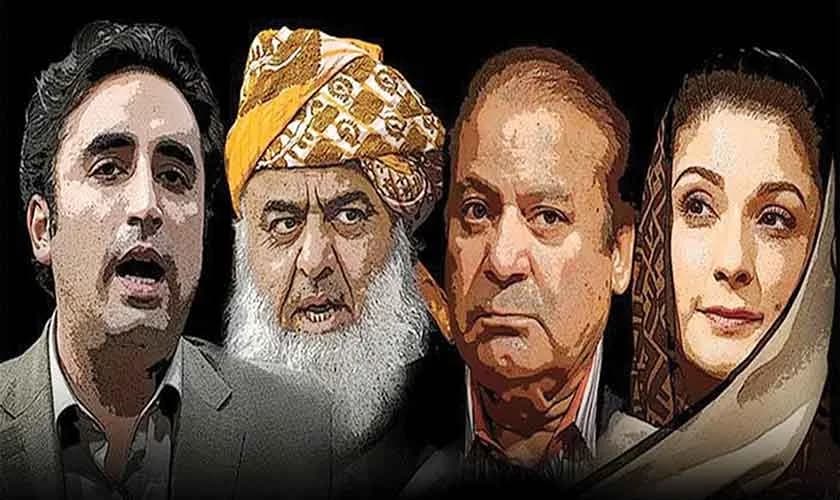
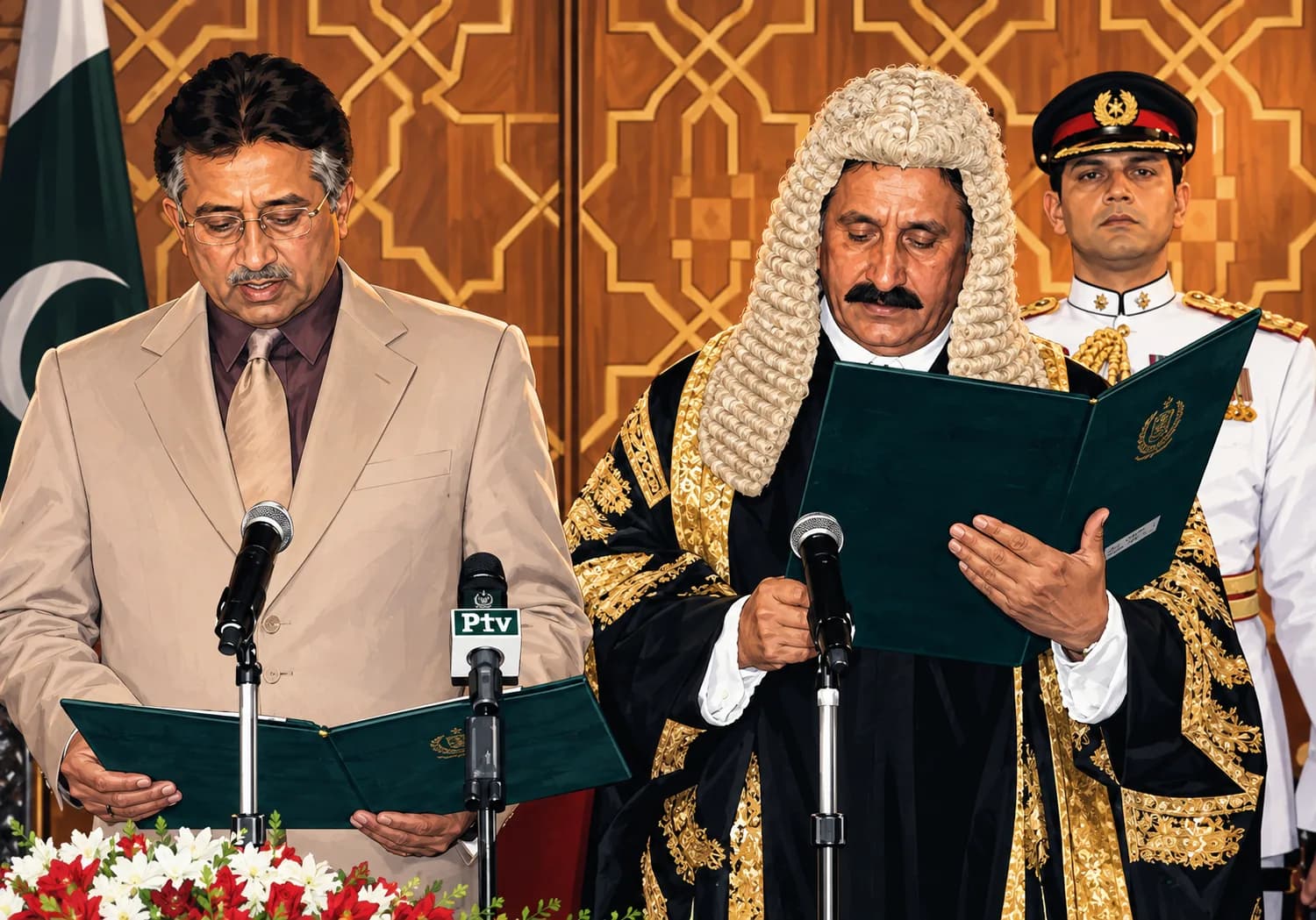
The long march by the lawyers and political workers finally concluded by the reinstatement of the Chief Justice. The three major actors in this judicial drama — the government, the opposition and the lawyers — have all behaved in a very predictable manner, true to their ideology and aspirations. An honest analysis is required not just of their immediate actions but of their overall stances, and that is what this article tries to do.
Asif Ali Zardari and the PPP government
The PPP government under Zardari has resisted the restoration of judges for the past 12 months despite the lawyers' continuous struggle, despite the Supreme Court Bar Association resolution, despite the unprecedented march of hundreds of thousands of lawyers, advocates and their supporters across the country. The reason is obvious: a free and independent judiciary would have been a major obstacle to the corrupt governance that the PPP is renowned for. The PPP tried every trick in the book — delaying the reinstatement, offering a committee, threatening the opposition, bribing parliamentarians. They only relented when the long march had reached Islamabad and the army made it clear to Zardari that they would not fire at the marchers.
The PPP government's hypocrisy on the issue of judicial independence is a textbook case of double standards. While they used the slogan of an independent judiciary when they were in opposition, the moment they came to power, they became the biggest obstacles to it. The lesson here is that in a democratic dispensation, all parties are only concerned about what serves their immediate interests — not principles, not the rule of law, and certainly not the welfare of the masses.
Nawaz Sharif and the PML-N
Nawaz Sharif used the lawyers' movement brilliantly to corner Zardari and push himself back to centre stage in Pakistani politics. While his stated motive of restoring the Chief Justice was genuine, there is no denying that his primary motivation was to weaken Zardari and position himself as a potential successor. The events of the long march were masterfully exploited by PML-N's political machinery.
However, it would be unfair to dismiss the contribution of Nawaz Sharif in making the long march a success. He did take personal risks, and his participation drew large crowds from Punjab. But one must not lose sight of the fact that Nawaz Sharif's enthusiasm for judicial independence evaporated completely when he himself was in power. During his two tenures, he showed scant regard for the judiciary and famously attacked the Supreme Court building in 1997 with his supporters. Politicians in our country have a very selective memory.
The Lawyers' Movement
The lawyers are the heroes of this entire episode. They launched a movement for a principle — that the rule of law must be upheld — and stuck with it for over a year against all odds. They were tear-gassed, baton-charged, arrested, and had their livelihoods threatened. They did not waver. Their movement was a shining example of civil courage and commitment to a principle.
However, the lawyers too must be asked some difficult questions. The judiciary they are fighting to restore is the same judiciary that, for decades, rubber-stamped every martial law, validated every constitutional deviation, and provided legal cover to tyrants. If the restored judiciary reverts to its old ways — as it very likely will in a system that has not fundamentally changed — will the lawyers march again? The answer, in all probability, is no.
The Islamic perspective
From an Islamic perspective, the entire episode underlines the futility of patchwork reforms within a fundamentally corrupt system. The problem is not a particular judge or even a particular government — it is the entire system of governance which is built on secular democratic foundations and is inherently designed to serve the interests of the elite rather than the masses.
Islam provides a comprehensive alternative. In an Islamic state, the judiciary is independent not because of the political calculations of a particular party but because it derives its authority directly from the Shariah. Judges are accountable not to politicians but to Allah. The Chief Justice cannot be removed by a presidential order because his appointment and removal are governed by clearly defined Islamic rules, not by the whims of a president who himself came to power through a dubious electoral process.
The restoration of judges is being celebrated as a great victory. Perhaps it is, in the narrow sense that an unconstitutional act has been reversed. But Muslims must not confuse tactical victories with strategic ones. The real victory will come when Pakistan is governed by Islam — comprehensively, not selectively — and when its rulers are sincere, qualified Islamic leaders who fear Allah more than they fear Washington or the IMF.
Until then, we will continue to see the same drama played out again and again: tyrants replaced by democrats who become tyrants, judges sacked and restored, long marches and short memories, and the masses continuing to suffer while the elite fight amongst themselves for the spoils of power.