Elections have arrived and discussions whether to vote or not are turning bitter. This article intends to weigh the arguments for and against voting from all possible perspectives. But before doing so, it is important to understand against what backdrop such discussions are often taking place.
1. The Backdrop
Khayer in the Ummah: First and foremost it is important to understand that those who are vehemently insisting on voting and those who are dead against it are both our brothers and sisters. Those who insist on the power of votes are fed up with the injustice, corruption, and oppression of this system and see their vote as the only opportunity to voice their anger and break the shackles. Similarly, those who argue against taking part in this electoral process do so because of their conviction that this act — however simple it may seem — is haram and will only provide another much-needed lifeline to democracy.
Voting is a 'style': Let's put aside the confusion of whether voting is permissible or not. Voting is a style (uslub) for expressing your opinion or choice on a matter, which is perfectly fine as long as whatever you are voicing your opinion for is permissible. If a mafia group seeks votes from their family members to decide on which house to rob next, would there be any doubt that participating in such voting would be haram? The same holds for elections. If you are choosing who will look after the affairs of the mosque or who will be the leader during a journey, there is no issue in voting — however, if as a result of the votes someone is granted permission to do Kufr, Zulm and Fisq, then of course such voting would be haram.
Emotions blur judgment: People are generally very emotional about this subject, and rightly so because a lot is at stake. However, the more important an issue, the more deserving it is that we put our intellect to it. You would agree that if a close family member is undergoing heart surgery, you'd be very emotional — but that won't lead you to search for the most honest plumber; you will take them to a hospital and look for a heart surgeon.
Think and act 'selfishly': If there is one matter where we should be selfish, it is when it comes to the Akhirah. Therefore, if by voting we even believe we can resolve all the problems in this world — but at the same time we understand this action within democracy to be haram — the only sensible choice would be not to vote.
2. Shariah Perspective
Democracy is not allowed in Shariah: Democracy is derived from the Greek dēmokratía — a composite of demos (the people) and kratos (rule). It is the rule of the people. Democracy gives the power of legislation to the people or to those who represent them in parliament. Based on that, legislative authority is given to someone other than Allah ﷻ — and what the majority agree upon becomes laws binding on the nation, even if contrary to the Deen.
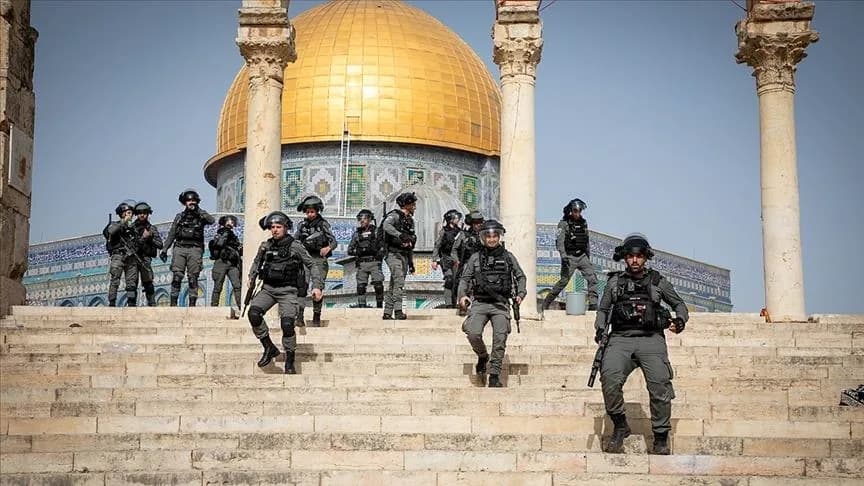
Democracy allows usurious interest (riba) and taxation on the poor and indebted — which is not allowed according to Islam. Democracy forbids our armies from fighting in support of Muslims in need, in Palestine and Kashmir, even though it is an obligation.
Allah ﷻ said:
"And whosoever does not judge by what Allah has revealed, such are the disbelievers." [TMQ Surah al-Ma'idah 5:44]
Abdullah Ibn `Abbas (ra) commented: "Whoever rejects what Allah has revealed, will have committed Kufr, and whoever accepts what Allah has revealed but did not rule by it, is a Zalim (unjust) and a Fasiq (rebellious) and a sinner."
Regarding voting for the lesser evil: The Shariah principle of "the lesser of two evils" is applied in the case of not being able to avoid the prohibitions — it does not apply when all prohibitions can be avoided. We cannot say we can participate in the ruling of disbelief even though it is prohibited, so that we do not leave all positions of ruling to the transgressors. It is like someone who says: let us open a bar for alcohol and earn money from it, instead of letting the kafir open it.
3. Practical Perspective
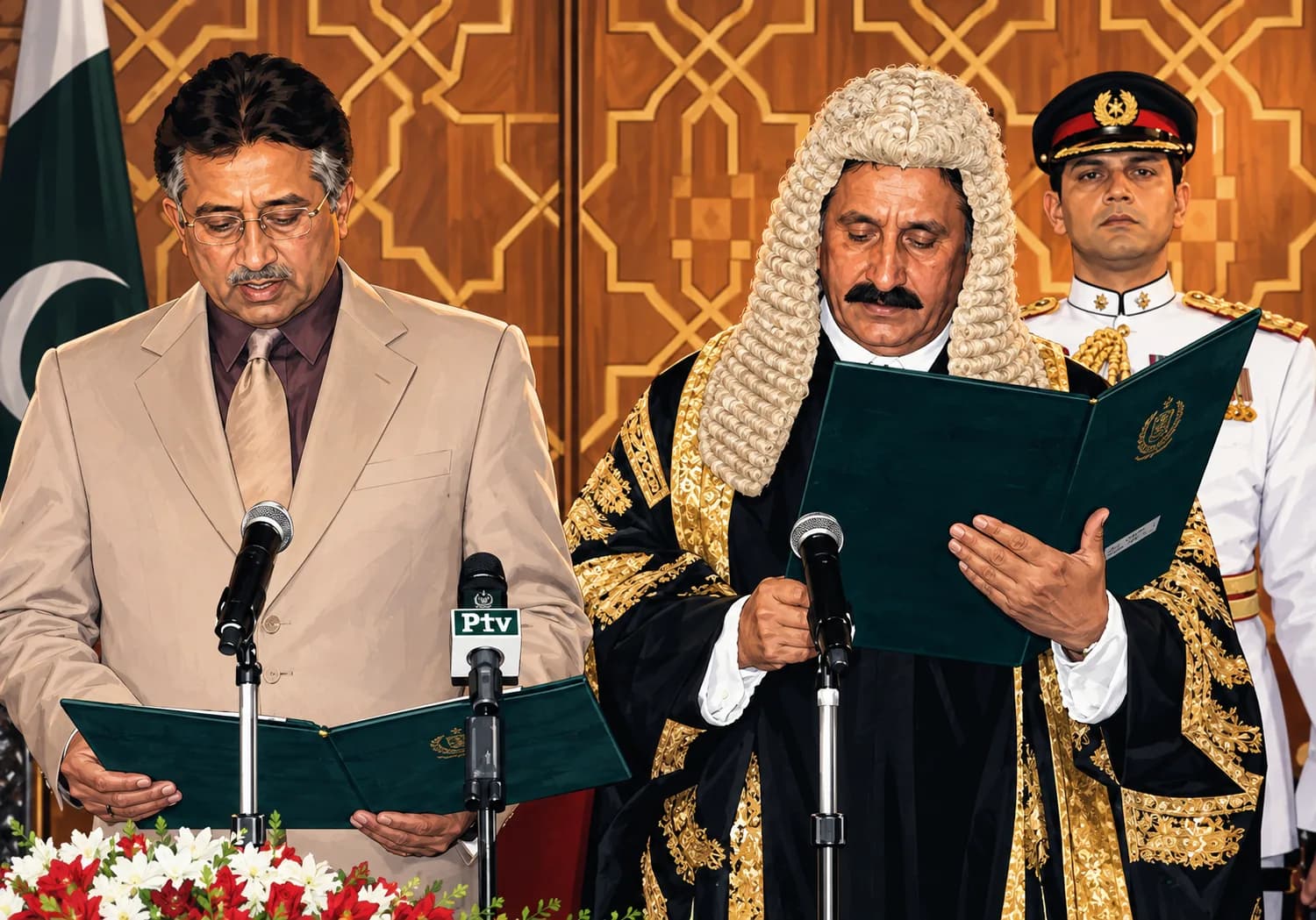
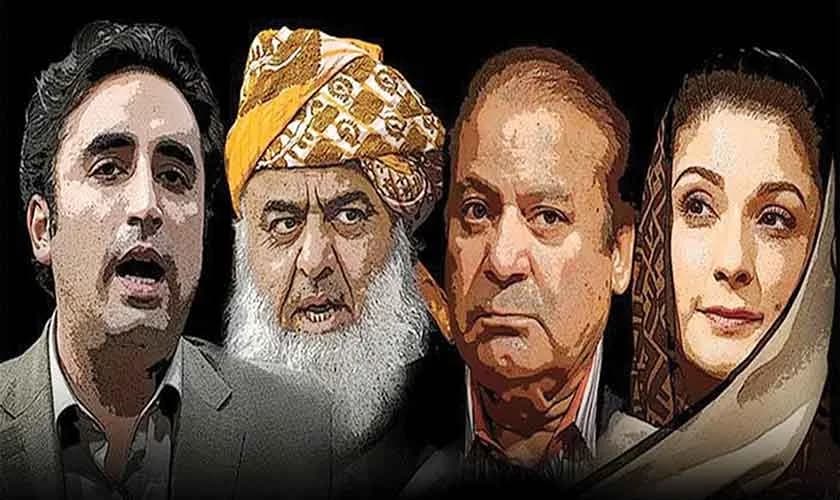
Isn't it already written on the wall who will win the elections? Is this not the nth time that Pakistan is witnessing a sham electoral process? Aren't our kingmakers the most innovative when it comes to pre-poll, during-poll, and post-poll rigging?
Post elections, practically nothing changes except for a few faces. Corruption is a problem — but what about the corruption which the system allows? Be it regressive taxation which indiscriminately taxes even the indebted and poor, or the free-floating fiat currency which in recent years lost half its value, or the interest-based financial system which robs the vast majority to benefit the elite — all these corrupt practices aren't the result of dishonest people. They are pillars of Western capitalism which this system stands guard to defend at any cost.
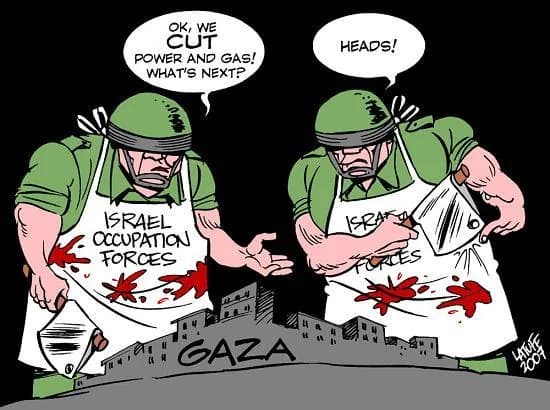
Moreover, once in power, legislation is for those with influence and power — both within the country and external powers like the US. This is true for all democracies. Had it not been like this, world powers wouldn't have been able to support the genocide in Palestine as their masses have clearly shown their dissent for these decisions.
4. Change-Methodology Perspective
The discussion isn't about whom to vote for, but rather whether voting is the correct method for changing the system. How can one change the system whilst getting legitimacy from that very system? Every system is designed to defend itself, particularly from within.
Those who are sincerely interested in changing the system should refer to the Seerah and learn from the example of the Prophet (saw) — how he, without any participation in the existing system of the Quraysh housed in Dar al-Nadwa, despite very lucrative offers to do so, taught us to abstain from such compromises and draw a clear line between their deen and ours.
5. Contextual Perspective
The current world order is rigged — by design meant to serve those few nations who created it. Be it the UN, WTO, WB, IMF, ICJ, FATF, and multiple more such institutions — they all serve to strengthen the grip of world powers, in particular the USA, on the rest of the world. Every injustice, genocide and war in the last 75 years has taken place with their full compliance and silence.
Ask yourself a simple question: would you play a rigged game? If you know the rules are made by your opponent and are such that you cannot win, would you be naive enough to still hope for the best? If not, why then play with the future of our coming generations by remaining in this game of democracy which has miserably failed to deliver for the last 75 years?
6. Mindset Perspective
This breeds a defeatist mindset — the belief that we can't really change the system, so let's try to limit the damage. In addition to going against Islam, this is something we must avoid.
We Muslims believe that Allah (swt) has the absolute power to do anything. Prophet Musa (as) was asked by Allah (swt) to hit his stick on the water and it was split into two. He didn't argue about how this apparently insignificant action would help. Exactly the same way, whether we are convinced or not, we should stick to Shariah in all matters.
7. Historical Precedent
On 22 Muharram 1344 (12 August 1925), Sheikh Ali Abdul Raziq — himself a scholar of Al-Azhar and a Shari'ah judge — was expelled from the community of scholars by the unanimous agreement of twenty-four scholars from the Council of Senior Scholars. The reason? He wrote a book arguing in favour of a democratic governance system and its permissibility in Islam.
Just imagine: less than a century ago, this was unthinkable. That was the standard position of Muslim scholars for 13 centuries. Unfortunately the last century — the only one without the shield of the Muslims, the Khilafah — has been monumental in changing our mindset.
9. Conclusion
Those who seek change must be able to differentiate between merely changing the faces and changing the very system which is the cause of all our ills.
Think about it simply: regardless of who comes to power while still subscribing to the current world order, is it possible that under their leadership Pakistan dismantles its interest-based banking system? Will Pakistan stop taxing its poor population who qualify for Zakat? Will Pakistan stop dancing to the tune of the IMF when it comes to increasing prices of basic commodities? Will Pakistan liberate Kashmir and materially aid the Palestinians?
Clearly, the answer to all of these questions is a big NO — and therefore anyone who wants to look beyond the Hukm of Allah, who stands with the poor of this country, who wants to see Islam implemented in letter and spirit, and who longs for the unification of Muslim lands, must stop being part of the electoral process and start inviting to the Islamic political system called Khilafah.