This article was originally published on islamsperspective.blogspot.com
On 24th of November 2008, a column appeared in the daily Jang in Urdu by Bushra Ijaz. I was deeply moved by the column in the sense that it was a blend of facts and opinions, mixed in a way to attract the 'Islam loving' reader and at the same time striking a blow to secularize him, without him even noticing it. This is not the first such article — rather most of our dailies are filled with such columns, which on their face value appear very Islamic but in reality question the very fact of Islam being a comprehensive way of life for all times and people.
While more 'secular' writers contributing mainly in English dailies would use terms like 'moderation', 'enlightenment', 'modernity' and 'progress', those publishing in Urdu dailies misguide their readers by using words like 'ijtihad', 'tajdeed', 'maslehat' and 'zaroorat'. These advocates of moderation are driven by different motives. While some are sincere in their intentions and misled by their ignorance about Islam, others deliberately present a mixture of facts and myths to malign it.
The column starts off by emotionalizing the reader about 'women rights' by pointing out some recent atrocities which were neither carried out in the name of Islam, nor were they a result of its teachings. On the contrary, they are a result of non-implementation of Islam at an individual, societal, governmental and global level. Still, the author jumps to call for an ijtihad — a need to reconsider Islamic laws on such atrocities — as if the ones which already existed were being implemented and failing, or as if there were none in this matter.
The interesting thing to be noticed is that while calling for an ijtihad the author doesn't bother to point out what is 'new' about this whole issue. We are not talking about praying on the North Pole where the Sun either doesn't set or doesn't dawn for six months, nor are we talking about stem cell research for which the hukm of Islam needs to be deduced from the available Sharai texts. No, we are talking about cases of rape, murder, domestic violence and torture inflicted upon women. Islam has not remained silent or ambiguous on these issues. What does need to change, however, is the pathetic system of justice in Pakistan which has left enough loopholes for the mighty and the rich to escape prosecution — and such change is in line with what Islam has already taught us.
The author further suggests that issues like Hudood, men marrying more than one wife, laws of women witnesses and the right of divorce for women should be reconsidered in the name of ijtihad — without bothering to point out what has changed in all these matters or how these issues have contributed to the downfall of Muslims. She further suggests that while the West produced Adam Smith and Karl Marx, Muslims are still studying the classical texts of 'Kitab al-Kharaj' and 'Kitab al-Amwaal'. This is the line which motivated me to write this blog.
Firstly: how does the author fail to realize that both names mentioned are of people who attempted to give a man-made economic system to the world, failing miserably. Karl Marx with his socialist economic system already failed — not even the Chinese and Russians speak of going back to such a flawed system anymore. Adam Smith is the founding father of the capitalist economic system which has become one of the biggest disasters and a source of brutal economic exploitation. Today, when even non-Muslims are criticizing the capitalist economy in the wake of the recent financial crisis, how could a Muslim take pride in its founder?
Secondly: is it so difficult to see the difference between 'studying' something and 'implementing' it? Are these books — which can be seen as the pillars of the Islamic economic system — implemented anywhere in the Muslim world? In fact it is the non-implementation of these books, in other words the non-implementation of Islam, which is the root-cause of all our problems.
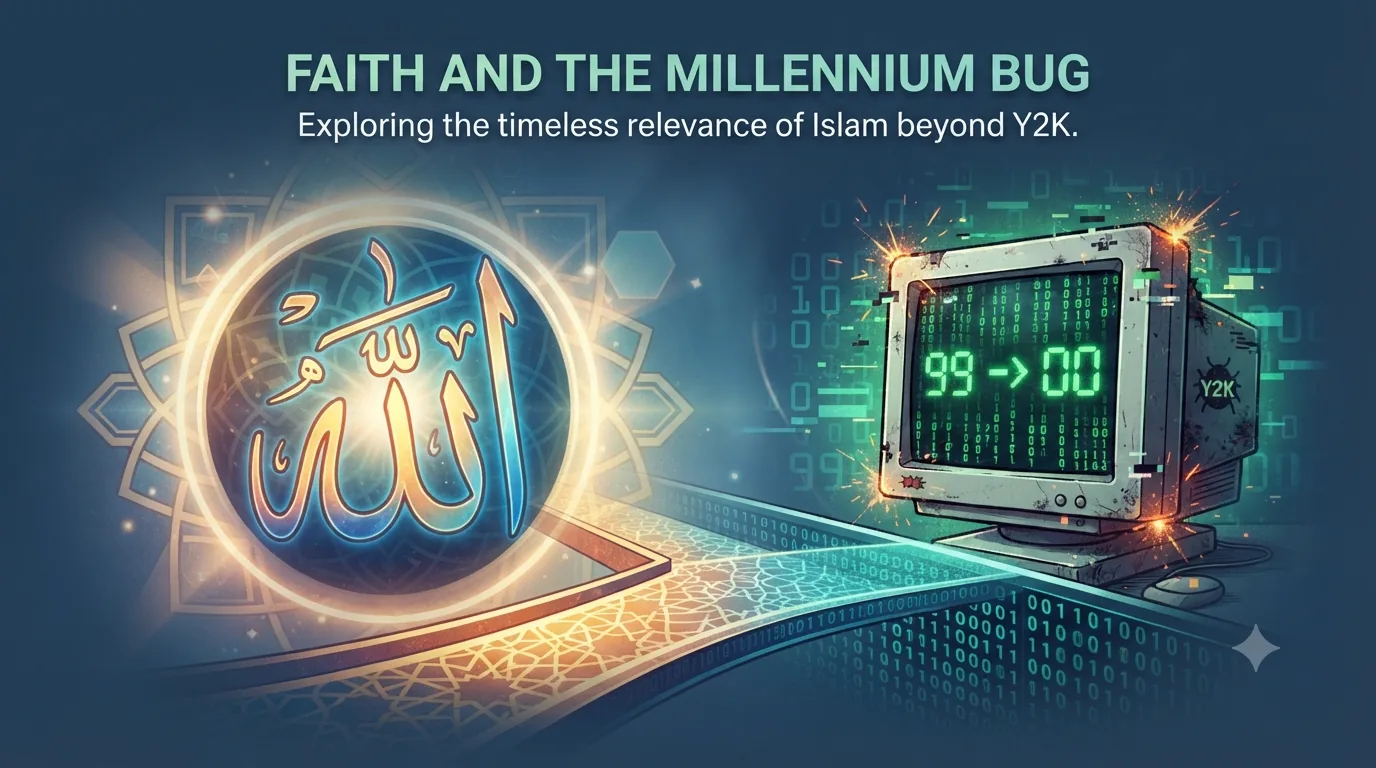
I would like to conclude by saying that the purpose of ijtihad is definitively not to adjust and adapt Allah's deen to the societal norms and practices of our times. On the contrary, it is the exhaustive derivation of Allah's hukm on a specific matter which is either new as a result of technological advancement or where there exist contradictory evidences that scholars attempt to reconcile. Therefore, it can be said with certainty that Islam — unlike computers — doesn't need to be made Y2K compliant, where programmers were so myopic in the 70s and 80s that they simply didn't provide for the possibility of their software running beyond 31st December 1999.